ISO 9001 Certified Inspection and Repairs for Lined Chemical Transport ISO Containers
Published on: September 19, 2025 Topics: LiningsISO tank containers are intermodal containers designed for the safe transport of liquid chemicals based on International Organization for Standardization (ISO) specifications. These specialized vessels, which carry both hazardous and nonhazardous materials, are encased in protective frameworks and are designed for both road and rail transport.

For containers containing highly corrosive chemicals or protecting high-purity liquids, the lining of choice is often high-performance fluoropolymers. Over time, the demanding conditions and harsh chemicals these tanks encounter can compromise lining integrity, requiring professional assessment and maintenance. This blog will look into how to leverage tank linings and repair services to extend the life of your transportation vessel and protect transported material.
Electro Chemical Engineering and Manufacturing Co. (ECM), now part of Knight Material Technologies, provides ISO certified inspection and relining services to help companies pass inspection and get ISO tanks back on the road quickly. Timely inspections and repairs help companies maintain chemical delivery schedules and avoid the costly disruptions that can accompany unexpected equipment failures or ISO tank shortages.
Understanding DOT-Mandated ISO Container Inspection Requirements
Due to the nature of the materials they carry, the Department of Transportation (DOT) mandates regular inspections for all chemical transport vessels for road and rail to ensure roadworthiness and public safety. Any containers destined for overseas shipments also must meet international regulatory compliance for global shipping. ISO container inspections are mandated for either 2.5-year or 5-year cycles, depending on the specific requirements and exemptions applicable to each vessel and its intended use. The DOT relies on certified ISO inspection facilities such as ECM to perform the assessments and issue the necessary certifications indicating the vessel passed inspection and is suitable for use.
For lined ISO containers, these inspections serve dual purposes: verifying mechanical roadworthiness and assessing the integrity of the fluoropolymer lining system. While some companies operate under exemptions that allow external-only inspections, many fluoropolymer-lined vessels carrying corrosive chemicals require internal physical examination to evaluate lining condition and detect potential failures that could compromise chemical purity or containment.
The Critical Role of Fluoropolymer-Lined ISO Tank Inspections
Fluoropolymer-lined ISO tanks transport some of the most demanding chemicals in industrial applications, including high-purity semiconductor fluids chemicals, corrosive acids and specialized pharmaceutical ingredients. These applications demand absolute integrity. Even a microscopic breach in the fluoropolymer lining can result in product contamination, equipment corrosion or safety hazards.
The ISO inspection goes beyond basic roadworthiness checks. Engineers must evaluate the condition of fluoropolymer linings, assess adhesion systems and identify any developing issues before they compromise vessel performance. This specialized expertise requires a deep understanding of lining materials, application techniques and failure modes – knowledge the technicians at ECM possess.
Advanced Helium Leak Detection: A Game-Changing Technology
One of ECM’s most significant differentiators is its helium leak detection testing capability—a technology unique in the lining industry. Traditional spark testing, while widely used, presents several limitations that can impact both safety and accuracy.
Consider the differences between helium leak detection and spark testing.
Spark testing works by applying high voltage across the lining material to detect breaches. However, this method carries inherent risks: excessive voltage can actually burn holes through perfectly intact linings, creating problems where none existed. Additionally, spark testing can miss tortuous pathways—think Swiss cheese-like defects where damage creates winding channels that don’t provide a direct electrical path but still allow chemical migration.
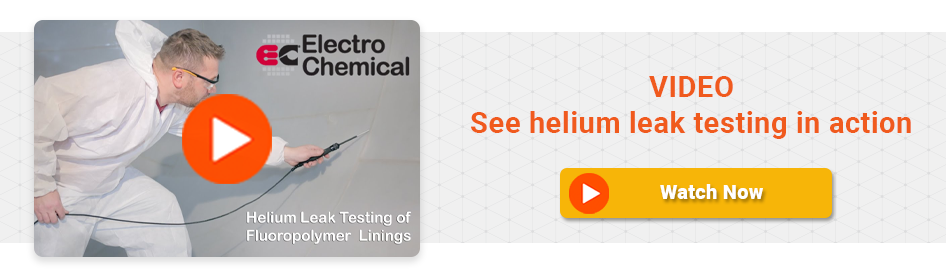
Helium leak detection eliminates these concerns with a non-destructive approach. The process involves pressurizing the interstitial space between the lining and tank wall with helium, then using a mass spectrometer inside the vessel to detect helium molecules. This method can identify flaws 100 times smaller than spark testing can detect, without any risk of damaging the lining during evaluation.
For engineers managing high-purity chemical transport, this precision detection matters enormously. It can be frustrating to trace seemingly mysterious contamination issues especially when visual inspection and spark testing show no problems. Helium detection can succeed when other methods fail, to identify and locate for repair a microscopic defect, to bring an ISO tank back into compliance.
To summarize the benefits, helium testing:
- Detects the most miniscule flaws (1/100th the size of those spark testing can find)
- Leaves no residue on the liner
- Does not degrade the liner
- Inexpensive to perform
- Minimizes risk of a pinhole lead
Minimizing Downtime Through Integrated Services for ISO Container Inspection and ISO Container Repair
When inspections reveal lining issues, ECM’s integrated approach provides significant advantages for maintaining delivery schedules. As one of only three quality fluoropolymer lining shops in North America, ECM can handle everything from minor repairs to complete relining projects. This capability eliminates the common industry problem of discovering issues during inspection but then facing extended delays while searching for qualified repair facilities.
Repair timelines vary dramatically based on the extent of damage discovered. Minor defects might require only a few days to address, while extensive damage necessitating complete relining can extend to 6-8 weeks. Having integrated inspection and repair capabilities under one roof streamlines the process and reduces total downtime.
The quality of repair work directly impacts long-term vessel performance. ECM’s experience with advanced fluoropolymer materials—including glass-backed PFA systems and specialized adhesive technologies—ensures repairs meet the demanding requirements of corrosive and high-purity chemical service.
The High Cost of Delivery Disruptions
For chemical companies, missing delivery commitments can be catastrophic. As one example, a company might be contracted to deliver a specified number of tank loads of hydrogen peroxide to a foundry company each month. If the trailer is down or ISO tanks are out of commission due to failed inspections, this could impact their delivery schedule or reliability.
ISO tanks are expensive assets, which can either be leased or owned. Every day out of service directly impacts delivery schedules and customer relationships. For logistics and engineering teams, inspection timing represents a critical balance between regulatory compliance and operational continuity.
Typical inspection turnaround times hover around one month, though this varies with facility capacity and customer urgency. The process involves not just internal inspection and testing, but also third-party services such as pressure relief valve certification. Understanding these timelines helps logistics teams plan maintenance schedules that minimize operational disruption.
Companies with exemptions allowing external-only inspections face different scheduling considerations, but even these vessels eventually require internal assessment when performance issues arise. Having established relationships with qualified inspection facilities becomes crucial when unexpected problems demand immediate attention.
Strategic Considerations for Uninterrupted Chemical Logistics
ECM’s focus on fluoropolymer-lined tanks reflects the specialized nature of this market segment and the critical importance of maintaining delivery reliability. While some tank trailers and ISO containers handle non-corrosive materials in unlined vessels, the number of vessels requiring fluoropolymer linings represents some of the most critical applications in chemical manufacturing, where delivery disruptions can shut down entire production lines.
Semiconductor fabrication, pharmaceutical production and specialty chemical manufacturing all depend on ultra high purity chemical delivery. For these applications, lining integrity isn’t just about equipment protection; it’s about product quality and process reliability. A compromised lining can contaminate an entire batch of high-value chemicals or disrupt critical manufacturing processes.
Protecting Your Delivery Commitments
Properly maintained fluoropolymer linings can provide 20-plus years of reliable service, but this longevity depends on appropriate material selection, expert application and regular professional assessment. ECM’s comprehensive approach, which combines advanced inspection technology with world-class repair capabilities, helps protect your delivery commitments while maximizing asset investments.
For engineering teams responsible for chemical transport assets, partnering with a facility that understands both the technical demands of fluoropolymer lining systems and the operational realities of chemical logistics provides the reliability needed to meet customer commitments. When regulatory compliance, safety requirements and delivery schedules converge, having access to specialized expertise makes the difference between smooth operations and costly contract violations. ECM provides ISO container inspections and repairs in Houston, Texas in addition to ISO container inspections and repairs in Emmaus, Pennsylvania. Contact ECM today to schedule your ISO tank inspection.