
Knight Materials
FLEXISADDLE® Ceramic Random Packing
CERAMIC SADDLES FOR MASS TRANSFER APPLICATIONS

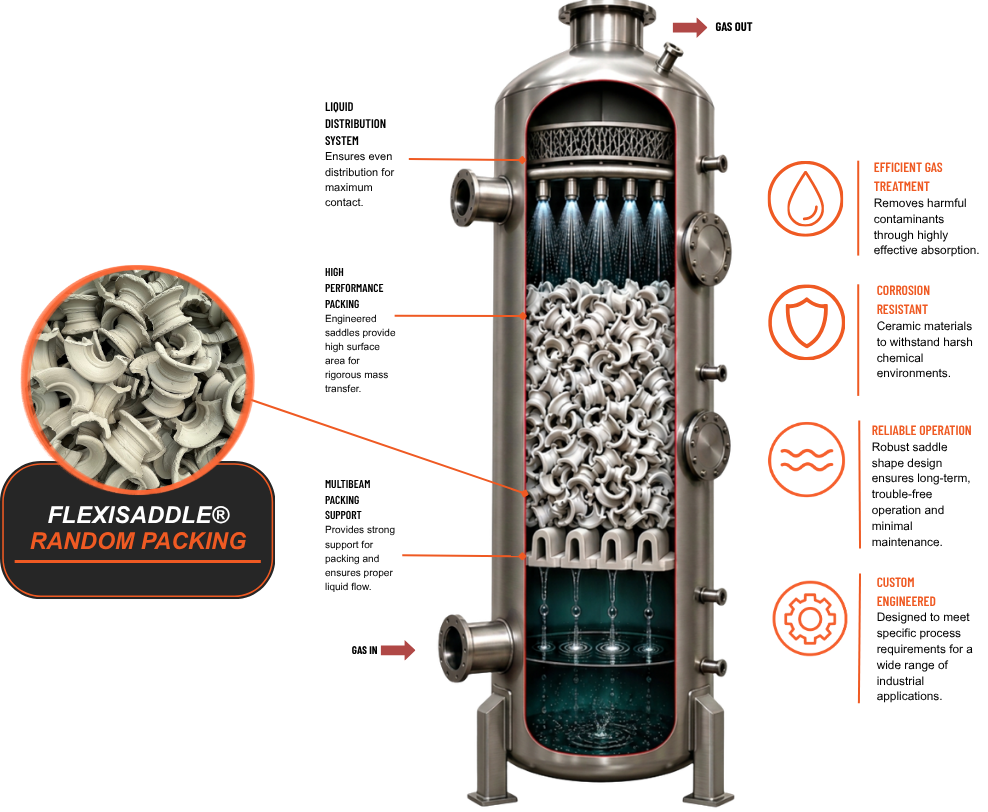
What Are Ceramic Saddles
Ceramic or porcelain saddles are saddle-shaped packing elements that are extruded and fired to ~2,100°F (1,150°C). The saddles are randomly loaded into towers and columns to promote contact between gas and liquid phases. In absorption towers, distillation columns and stripping systems, packed beds of ceramic saddle media serve as the mass transfer core — creating the continuous, intimate gas-liquid contact required to drive component separation across every level of the packed bed.
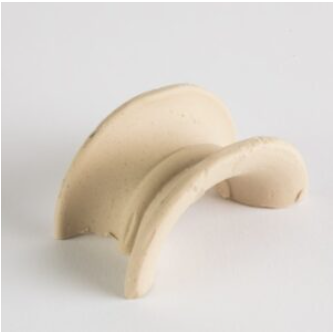
Ceramic saddles are a proven industrial tower packing material used in absorption towers, quench towers, distillation columns, stripping systems and corrosive chemical process applications across the globe. Their distinctive saddle profile generates high geometric surface area and supplies structural strength, promotes even gas-liquid distribution and resists the corrosive and environmental stresses associated with a packed bed. Engineered for high chemical resistance, outstanding thermal stability and optimized mass transfer efficiency, ceramic saddles deliver dependable, long-life performance in the most challenging packed tower applications.
Knight Material Technologies manufactures ceramic saddle packing to chemical process engineers, acid plant operators, petrochemical facilities and construction (EPC) contractors requiring reliable, high-performance tower packing from an original equipment manufacturer (OEM) trusted supplier.
Key Features and Benefits of Ceramic Saddles
High Chemical Resistance
- Resistant to acids and solvents
- Ideal for corrosive environments
Thermal Stability
- Maintains structural integrity
- Performs reliably across a wide range of operating temperatures and concentrations
High Surface Area and Efficiency
- Improves gas-liquid contact throughout the packed bed
- Enhances separation performance per unit of bed depth
Low Pressure Drop
- Optimized flow dynamics versus Raschig rings
Mechanical Strength and Longevity
- Low breakage during installation and operation
- Long service life reduces replacement frequency and operating cost
Ceramic Saddle Size Selection Guidance
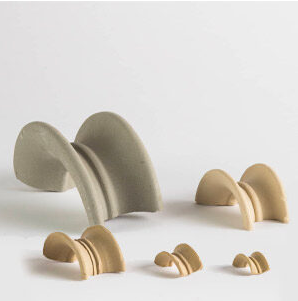
- Smaller sizes: higher surface area, higher efficiency, higher pressure drops
- Larger sizes: lower pressure drop, better suited for high flow applications
- Application-based recommendations: Knight’s technical team can assist with size selection based on your specific system requirements
FLEXISADDLE® Ceramic Random Packing
| SIZE |
CRUSH STRENGTH |
PIECE COUNT |
PACKING DENSITY |
VOID SPACE |
ALUMINA (Al₂O₃) |
|---|---|---|---|---|---|
| 0.75 in |
153 lbs 69 kg |
4,900 pcs/ft³ 172,970 pcs/m³ |
44 lbs/ft³ 705 kg/m³ |
69% | 28% |
| 1 in |
211 lbs 95 kg |
2,100 pcs/ft³ 74,100 pcs/m³ |
42 lbs/ft³ 673 kg/m³ |
70% | 28% |
| 1.5 in |
200 lbs 90 kg |
575 pcs/ft³ 20,300 pcs/m³ |
39 lbs/ft³ 625 kg/m |
74% | 28% |
| 2 in |
200 lbs 90 kg |
320 pcs/ft³ 11,700 pcs/m³ |
44 lbs/ft³ 705 kg/m³ |
76% | 28% |
| 3 in |
1087 lbs 487 kg |
59 pcs/ft³ 2080 pcs/m³ |
33 lbs/ft³ 529 kg/m³ |
77% | 28% |
Applications of Ceramic Saddles
Chemical Processing
- Distillation columns: ceramic/porcelain saddle packing provides the vapor-liquid contact surface for fractionation in corrosive and high-temperature distillation service.
- Absorption towers: ceramic packing saddles facilitate selective transfer of soluble gas components from rising process gas into descending liquid solvent.
- Stripping columns: ceramic saddle media supports transfer of dissolved volatile compounds from liquid process streams into upward-flowing gas or steam phases.
- Quench columns: ceramic saddles facilitate the complete cooling of the gas as it approaches the adiabatic saturation. The ceramic saddles facilitate the condensing of dissolved acid gases into the quenching light phase. Ceramic saddles also help capture particulate matter.
Acid Plants and Corrosive Systems
- Sulfuric acid drying towers: ceramic saddle packing withstands direct contact with concentrated sulfuric acid and oleum streams where metallic or polymer alternatives are chemically incompatible.
- Absorbers: SO₃ absorption towers, inter-pass (IPAT) and final (FAT) absorbers in sulfuric acid manufacturing depend on ceramic packing saddles for their superior performance in acid resistance, surface area and mechanical durability.
Petrochemical and Refining
- Separation processes: amine treating columns, gas processing towers and separation units in petrochemical and refining operations use ceramic saddle packing where corrosive or high-temperature service conditions are present.
Why Choose Knight Material for Ceramic Saddles
- Made in the USA: Knight Material manufactures ceramic saddle media in Canton, Ohio, providing customers with domestically manufactured mass transfer ceramic saddles backed by reliable U.S. production and supply
- Inventory availability: comprehensive stock of ceramic saddle packing across all standard sizes for fast fulfillment on new construction and replacement projects
- Custom sizing options to meet non-standard column and tower design specifications
- Fast shipping and reliable sourcing to support project schedules and unplanned packing replacement requirements
- Rating Sheets available to support system evaluation and ceramic packing selection
- Technical expertise in packed column design, packing selection and mass transfer bed sizing for chemical and corrosive process service
- Industry partnerships with leading chemical process equipment and tower internals suppliers
Request a Quote/Contact
Ready to order ceramic saddles for your mass transfer application? Knight Material Technologies provides fast quotes, technical guidance and reliable delivery across all standard ceramic saddle sizes and configurations. Contact our team today.
FAQ
What are ceramic saddles used for?
Ceramic saddles are used as random packing in absorption columns, distillation towers, scrubbers and stripping systems to maximize gas-liquid contact surface area. Their curved saddle geometry promotes high void fraction and low pressure drop while preventing channeling, making them a reliable choice for separation, purification and treatment processes across chemical, petrochemical, pharmaceutical and acid plant operations.
Are ceramic saddles better than Raschig rings?
In most modern tower and column designs, yes. Ceramic saddles deliver higher void fraction, greater effective surface area, lower pressure drop and better resistance to channeling than comparably sized Raschig rings. This translates to improved separation efficiency, higher column capacity and reduced energy demand — which is why ceramic saddles have largely replaced Raschig rings as the standard random packing choice in new installations.
What industries use ceramic saddle packing?
Chemical manufacturing, petrochemical refining, sulfuric acid production, pharmaceutical processing, food and beverage production and industrial solvent recovery — anywhere a packed tower is used for absorption, distillation, scrubbing or stripping.
What is the difference between FLEXISADDLE® ceramic saddles and INTALOX® ceramic saddles?
INTALOX® is a registered trademark of Koch-Glitsch, LP. In 2002, ownership of the INTALOX® trademark and related mass transfer technologies was transferred from NorPro to Koch-Glitsch, establishing Koch-Glitsch as the steward of the INTALOX® product line. While INTALOX® is a proprietary brand, the term “Intalox ceramic saddles” continues to be widely used throughout the sulfuric acid industry as a generic reference to ceramic saddle-shaped random packing.
FLEXISADDLE® ceramic saddles provide a high-performance chemical ceramic alternative for users seeking the equivalent saddle geometry and proven performance characteristics historically associated with legacy “INTALOX® ceramic saddles”.
FLEXISADDLE® is a proprietary Knight Material Technologies brand manufactured in Ohio from high-performance chemical ceramic.