Knight Materials
Rare Earth/Critical Mineral Processing
Choosing the Right Construction Method
Knight Material Technologies and its affiliated companies, Electro Chemical Manufacturing (ECM) and Superior Dual Laminate (SDL), offer three different construction approaches for rare earth process facilities. The right one depends on the vessel, the process condition, and the acid involved.
- Brick-lined construction (Knight): DURO® and KNIGHT-WARE® acid brick set over a PYROFLEX® membrane. This is best suited to large, fixed vessels handling high-temperature, highly concentrated acid, and to slurries with abrasive ore particulate, such as monazite or xenotime bake-leach tanks.
- Fluoropolymer-lined construction (ECM): linings in PTFE-M, PFA, PVDF, ECTFE, ETFE or FEP, bonded to a metal or FRP shell. Best suited to lower-abrasion, high-purity duties such as solvent extraction circuits, where a smooth, chemically inert surface limits fouling and product contamination.
- FRP dual laminate construction (SDL): a chemically resistant thermoplastic liner (PVC, CPVC, PP or PVDF) over a fiberglass-reinforced structural shell. Lightweight and cost-effective for large, custom-fabricated tanks, scrubbers and ducting where weight and installation speed matter more than extreme abrasion resistance.
No single construction method fits every stage of a rare earth process system.
Knight Supports Rare Earth and Critical Mineral Recovery Projects Throughout the Process
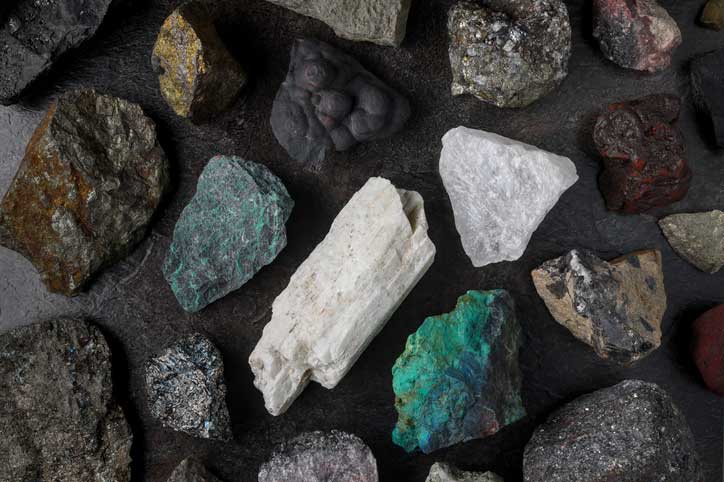
Knight and its subsidiaries have provided lining solutions for process plants for a wide range of rare earth and critical minerals. These include tantalum, beryllium, indium, cobalt, nickel, zinc and copper. Knight provides its expertise to protect, as a single-source partner from design through installation.
- Engineering and design of steel vessel shells and lining systems matched to the specific acid, temperature and pressure conditions of the recovery circuit
- Flexible fabrication siting to fit a project’s local-content requirements or logistics constraints, drawing on a global network of qualified fabrication partners
- Proprietary membrane and brick lining systems, the same PYROFLEX and KNIGHT-WARE family used in KMT’s autoclave lining work for gold, copper and nickel processing
- Factory-installed lining by KMT’s own dedicated crews, not handed to a third-party installer, before equipment ships to site
- Support for full letdown-train equipment, including flash vessels and blast spools, not just the primary leach vessel
Frequently Asked Questions
What is rare earth element processing?
Rare earth element processing extracts elements such as neodymium, dysprosium and yttrium from ore. Processing methods vary significantly by deposit type, from concentrated acid baking to much milder ammonium sulfate leaching.
What lining material survives rare earth acid-leach conditions?
Acid-resistant brick and membrane lining systems, such as Knight’s PYROFLEX® membrane paired with KNIGHT-WARE® acid brick, are engineered to withstand the sulfuric acid concentration and elevated temperature.
Is rare earth processing the same as critical mineral processing?
Most industry observers identify 17 rare earth elements, comprised of a family of 15 lanthanides plus scandium and yttrium.. When considering the difference between rare earth elements and critical minerals, they’re really different categories: rare earth elements are a chemistry definition, while critical minerals are a U. S. government policy designation, which is where the confusion and overlap comes from.
Critical minerals is a U.S. policy list that the Department of the Interior, through USGS, maintains. The current version is the final 2025 list, which grew from 50 to 60 minerals by adding boron, copper, lead, metallurgical coal, phosphate, potash, rhenium, silicon, silver and uranium.
How do they overlap?
Sixteen of the 60 critical minerals are rare earths. The only rare earth left out is promethium. The other 44 are not rare earths, including lithium, cobalt, nickel, graphite, copper and the platinum-group metals. So every rare earth except promethium is a critical mineral, but most critical minerals are not rare earths.
Does KMT install rare earth processing linings on-site or in a factory?
Knight can install lining systems either in a factory setting prior to shipment depending on size or arrange to have a team on-site, determined according to the project’s physical and logistics requirements.