
Knight Materials
Request a Quote/Contact
Ready to specify ceramic saddles for your RTO or environmental heat transfer application? Knight Material Technologies provides fast quotes, technical guidance, and reliable delivery across all standard ceramic saddle sizes and configurations. Contact our team today.
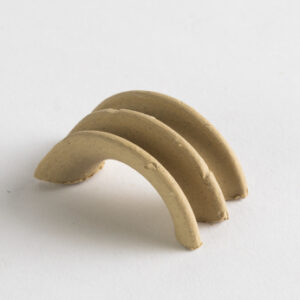
LPD® (Low Pressure Drop) LPD® ceramic saddles are the preferred choice over standard FLEXISADDLE® when an application is more sensitive to pressure drop, energy consumption, or gas distribution uniformity. Their high open area and aerodynamic geometry deliver 20% lower pressure drop and up to 40% reduced particulate retention, making them well-suited for systems pushing higher flowrates, facilities looking to reduce fan energy costs, or retrofits where blower capacity, vessel diameter, or stack limits are already constrained.
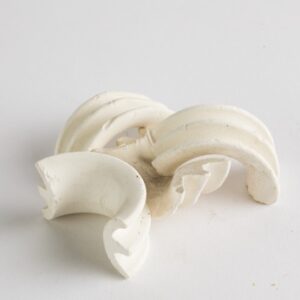
GR (Glazed Resistant) LPD® saddles are engineered for RTO applications where process gases produce intense alkali attack that degrades standard ceramic media over time. The glazed formulation delivers outstanding strength retention through repeated thermal shock cycling while maintaining the LPD ceramic saddle geometry’s 20% pressure drop advantage. For facilities dealing with aggressive alkali conditions, GR saddles offer extended service life, reduced bed replacement frequency, and a lower total cost of ownership over the life of the system.
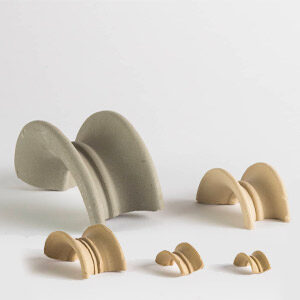
FLEXISADDLE® is the standard ceramic saddle and the most widely used random heat transfer media on the market. Its uniquely engineered geometry delivers high effective surface area and low airflow resistance, making it a reliable, high-value choice for standard RTO heat exchange applications across a wide range of installation sizes and operating conditions. When pressure drop and flow constraints are not a concern, its higher bulk density also delivers excellent bed stability and thermal inertia throughout the service life of the bed.
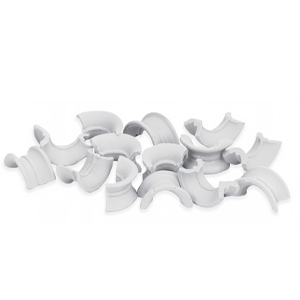
HPC (High Porosity Catalytic) a catalyst coating or catalytic material is applied to the ceramic surface for use in an RCO.
FLEXISADDLE® Ceramic Random Packing
| SIZE |
CRUSH STRENGTH |
PIECE COUNT |
PACKING DENSITY |
VOID SPACE |
ALUMINA (AL203) |
|---|---|---|---|---|---|
| 0.75 in |
153 lbs
69 kg |
4,900 pcs/ft3
172,970 pcs/m3 |
44 lbs/ft3
705 kg/m3 |
69% | 28% |
| 1 in |
211 lbs
95 kg |
2,100 pcs/ft³
74,100 pcs/m³ |
42 lbs/ft³
673 kg/m³ |
70% | 28% |
| 1.5 in |
200 lbs
90 kg |
575 pcs/ft³
20,300 pcs/m³ |
39 lbs/ft³
625 kg/m³ |
74% | 28% |
| 2 in |
200 lbs
90 kg |
320 pcs/ft³
11,700 pcs/m³ |
34 lbs/ft³
545 kg/m³ |
76% | 28% |
| 3 in |
1087 lbs 487 kg |
59 pcs/ft³
2,080 pcs/m³ |
33 lbs/ft³
529 kg/m³ |
77% | 28% |
LPD® (Low Pressure Drop) Ceramic Random Packing
| SIZE |
CRUSH STRENGTH |
PIECE COUNT |
PACKING DENSITY |
VOID SPACE |
ALUMINA (AL203) |
|---|---|---|---|---|---|
| 1 in |
290 lbs
132 kg |
1,350 pcs/ft³
47,700 pcs/m³ |
40 lbs/ft³
641 kg/m³ |
71% | 28% |
| 1.5 in |
300 lbs 136 kg |
60 pcs/ft³
16,300 pcs/m³ |
37.5 lbs/ft³
600 kg/m³ |
75% | 28% |
GR (Glazed Resistant) LPD® ceramic random packing
| SIZE |
CRUSH STRENGTH |
PIECE COUNT |
PACKING DENSITY |
VOID SPACE |
ALUMINA (AL203) |
|---|---|---|---|---|---|
| 1 in |
300 psi 2.1MPa |
1,350 pcs/ft³
47,700 pcs/m³ |
40 pcs/ft³
641 kg/m³ |
71% | 67% |
Common sizes range from small lab-scale media (19 mm/.75 inches) to large industrial sizes (76 mm/3 inches).
FAQ
What are ceramic saddles used for?
Ceramic saddles are used as heat transfer media in regenerative thermal oxidizers (RTOs) and regenerative catalytic oxidizers (RCO), where packed beds of saddle media absorb thermal energy from treated exhaust streams and release it back into incoming process air. This heat recovery cycle reduces supplemental fuel demand while maintaining the combustion temperatures required to destroy volatile organic compounds (VOCs) and hazardous air pollutants (HAPs) to EPA compliance standards.
What industries use ceramic saddle packing?
Ceramic saddle media is used in industries operating under EPA air quality mandates that requires regenerative thermal oxidation (RTO) for VOC and HAP destruction. Ceramic saddle media serves as the heat exchange core of the RTO, enabling high thermal recovery efficiency while minimizing operating fuel costs over the life of the compliance system.
What size ceramic saddles should I use?
For RTO applications, size selection is primarily driven by pressure drop tolerance and fan energy costs. While ceramic saddle size matters, saddle type does as well. Knight Material Technologies offers three types of ceramic saddles including FLEXISADDLE® Ceramic Random Packing or a classic saddle design; LPD(R) ceramic random packing and GR (Glazed Resistant) LPD(R) ceramic random packing with a chemically resistant glaze for demanding environments.